
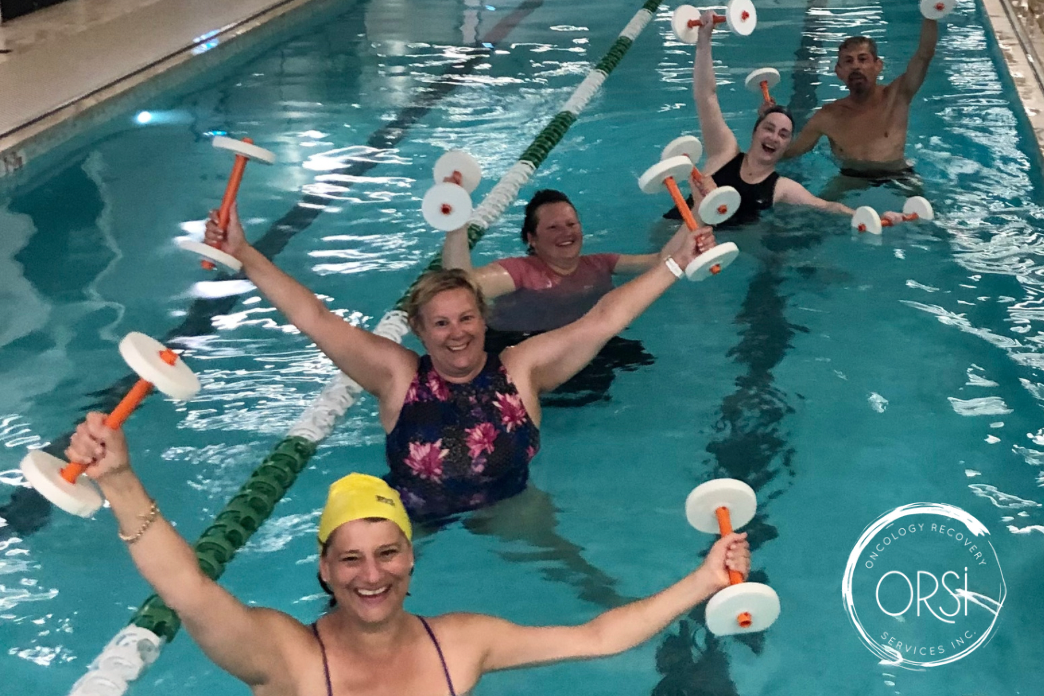
Hydrotherapy is the medicinal use of water through exercise. The buoyancy of the water holds the body afloat, enabling the performance of exercise with less effort and impact on the body compared to land exercises. A great advantage of hydrotherapy is that it creates a low impact workout without wear and tear on muscles, joints or bones. Hydrotherapy is therefore a great way to (re-) introduce exercise to those who are affected by illness, such as cancer, or are recovering from surgery or treatment like chemotherapy.
Why is hydrotherapy beneficial for cancer patients?
The benefits of hydrotherapy for cancer patients include:
- reduction of joint or muscle stiffness
- improvement of blood circulation
- strengthening the immune system
- enhancement of lymphatic flow
- assistance with tissue healing
- improvement of fitness and strength
- reduction of fatigue
- assistance with pain management
- improving mood
- connection with others
Exercising in water allows people with limited mobility or pain to build strength and improve fitness without putting too much stress on the body. Hydrotherapy can relax the muscles, increase flexibility, and assist people in performing aerobic exercises despite their physical limitations. In addition to the physical health benefits, hydrotherapy can assist with improving mental and emotional well-being through the release of endorphins. Endorphins are hormones that assist with pain relief, reduce stress and anxiety, and induce happiness. Hydrotherapy is usually performed in a group setting which also enhances social connection.
How can hydrotherapy assist with lymphoedema management?
A common complication that can arise from cancer treatment is lymphoedema. Lymphoedema is described as chronic swelling of a body part which can limit physical movement, cause discomfort or pain. Treatment often requires compression to be applied to the affected limb. The hydrostatic pressure of water generates a compressive effect on the body that can assist with reducing swelling. Exercising in water can provide a break from wearing compression garments but continue to provide compression. In addition, exercise is known to enhance the lymphatic flow though muscle pumping and deep breathing. Therefore, exercise in water provides great benefits to assist with managing lymphoedema.
Things to know before commencing hydrotherapy
Factors to consider before entering a pool to exercise:
- know the depth of the pool
- water temperature ideally no higher than 33°C
- good sanitary conditions of the pool
- consider your current swimming ability
- adequate physical fitness
- no open wounds or torn skin
- no infections
- no active treatment (radiation or chemotherapy)
- know the side effects of your medications
- medical clearance from your doctor
Avoid hot baths or Jacuzzis as they are considered hazardous with temperatures exceeding 38°C; for lymphoedema patients in particular as the heat can worsen their symptoms. Exercising in water, with temperatures from 29° to 32°C is optimal.
As a cancer patient it is important to get physician’s clearance from your medical team before participating in any pool activity.
Always talk to your instructor prior to attending a hydrotherapy class about your:
- medical condition
- past treatments and any side effects
- any physical limitations
- swimming ability
- current exercise tolerance
- fitness goals

At Oncology Recovery Services Inc. We offer drop-in classes to try the benefits of exercising in the water as well as a 10 pass for those who wish to attend regularly.
Give us a call on 8018 8240 to book your hydrotherapy class.