
Prehabilitation in Cancer Care
How preparing before treatment helps you feel stronger, more informed, and more in control.
A cancer diagnosis brings with it a great deal of uncertainty, about what lies ahead, how your body will cope, and what recovery will look like. At the same time, there is an important window of opportunity between diagnosis and the start of treatment that is often underused.
This is where prehabilitation comes in.
Prehab is about working with a specialist team before your surgery or treatment begins, so that when the time comes, you are as physically prepared, as well-informed, and as emotionally ready as you can be.
Below, we answer the questions we hear most often from patients and referrers, and explain exactly how our prehab service can support you or the people in your care.
What exactly is prehabilitation?
Prehabilitation – or ‘prehab’ – is a structured programme of care delivered in the period between cancer diagnosis and the start of treatment. Rather than waiting for your body to be put under stress and then working to recover, prehab takes a proactive approach: building your physical and psychological reserves before treatment begins.
Our prehab programme focuses on:
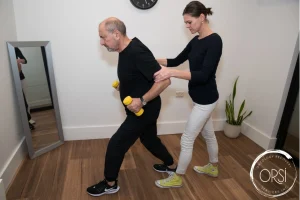
- Exercise therapy tailored to your current fitness, health status, and treatment plan
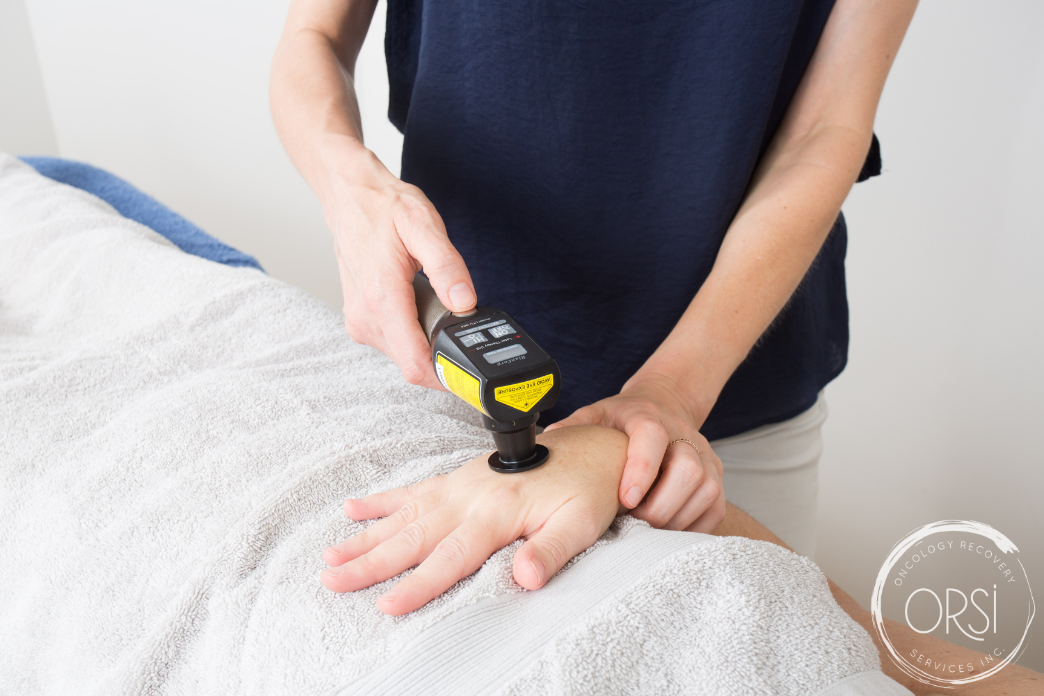
- Lymphoedema assessment and education, particularly when lymph node removal is planned
- Patient education – giving you the knowledge, language, and tools to feel prepared, proactive, and genuinely supported
Education is a cornerstone of what we do. Understanding what to expect, having your questions answered clearly, and knowing what signs to monitor can transform the treatment experience from something that feels overwhelming into something you approach with confidence.
Why is a pre-operative assessment important?
Before we design your prehab programme, we carry out a thorough pre-operative assessment. This gives us a clear picture of your current physical capacity, health status, and individual risk factors.
This baseline is important for several reasons:
- It allows us to create a programme that is specific to you – not a generic plan, but one built around your body, your treatment, and your goals
- It identifies any areas that need attention before treatment begins
- It provides a reference point that we can use to monitor your progress and detect changes over time – particularly relevant for lymphoedema monitoring
For referrers, this assessment also provides documented, objective data that supports clinical decision-making and continuity of care across the treatment pathway.
What role does prehab play before cancer surgery?
Surgery places significant demands on the body. The fitter and stronger you are going in, the better equipped your body is to manage that stress – and the more smoothly recovery tends to progress.
The evidence is clear: prehabilitation before cancer surgery can:
- Improve strength and physical function prior to the procedure
- Reduce the physiological impact of surgical stress
- Support faster, smoother post-operative recovery
- Decrease the likelihood of post-surgical complications
Alongside the physical preparation, we also use this time to educate you about what the surgery will involve, what your body will go through, and what the recovery pathway looks like. Going into surgery feeling informed is not a small thing, it affects how you experience the process and how quickly you bounce back.
What if lymph nodes are being removed?
If your treatment plan involves lymph node removal, prehab becomes especially important, and this is one of the areas where our service provides particular clinical value.
We will:
- Take a pre-operative baseline measurement of your limb fluid load using bioimpedance assessment
- Educate you on what lymphoedema is, why it can develop, and the early signs to watch for
- Equip you with self-management strategies before your surgery, so you are not learning these for the first time post-operatively
Having a documented pre-operative baseline is clinically significant. It is not just reassurance, it provides the reference data needed to detect early-stage lymphoedema accurately, support prompt diagnosis, and initiate treatment at the point where it is most effective.
What is lymphoedema, and how does prehab help?
Lymphoedema is a chronic condition involving swelling in a limb or body region, which can develop when lymph nodes are removed or damaged during cancer treatment. It is a lifelong condition, but one that is very manageable – particularly when identified and treated early.
Our prehab programme supports lymphoedema care by:
- Establishing a pre-treatment baseline that aids in accurate, early detection
- Teaching you the early signs to look for and when to seek review
- Guiding you through safe exercise and movement that supports lymphatic flow
- Providing education on prevention and self-management strategies tailored to your situation
Prehab cannot guarantee that lymphoedema will not develop, but it substantially improves your ability to recognise it early and manage it effectively, which has a significant impact on long-term quality of life.
What kinds of exercises are included?
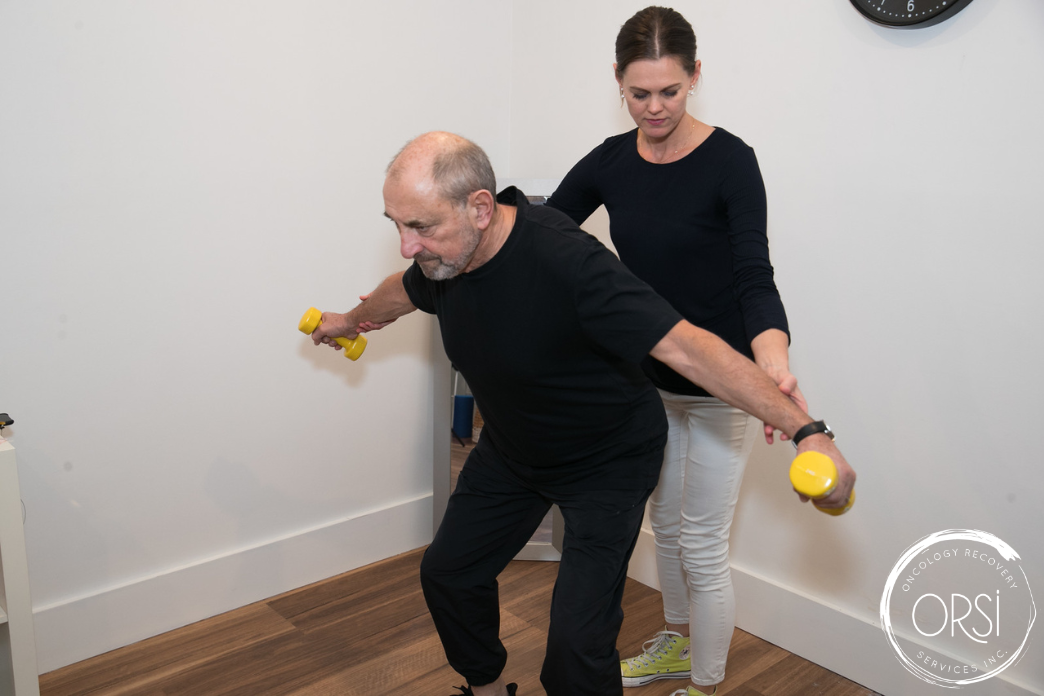
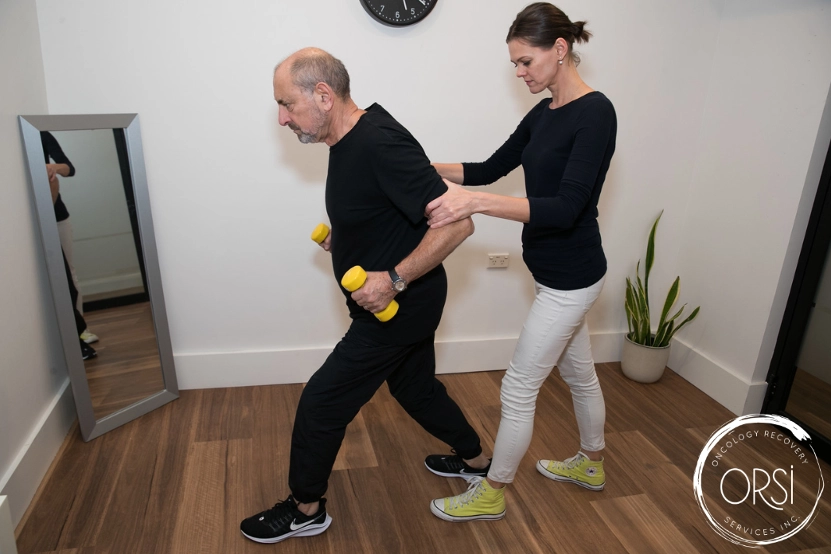
Your exercise programme is designed by our clinicians based on your pre-operative assessment, current fitness, treatment type, and any other health considerations. There is no one-size-fits-all approach here.
Programmes typically include a combination of:
- Aerobic exercise – such as walking or cycling to build cardiovascular capacity
- Resistance and strength training – using light to moderate load to build functional strength
- Mobility and flexibility work – to maintain range of movement and reduce tension
- Breathing exercises – particularly relevant before chest, abdominal, or thoracic surgery
The goal is never to push you to exhaustion. It is to build and maintain your physical capacity in a safe, evidence-informed way – and to give you tools and habits that will continue to serve you through treatment and recovery.
When should prehab begin?
The short answer is: as soon as possible after diagnosis.
Ideally, prehab begins before surgery or treatment starts, giving your body the maximum opportunity to build strength and resilience. However, prehab can also be valuable during chemotherapy or radiotherapy, where maintaining physical function and managing side effects are key priorities.
Even a short period of structured prehab, a few weeks, can make a meaningful difference. And if treatment has already begun, it is not too late. Speak to your oncologist, surgeon, or care team about a referral, and we can work with whatever time is available.
Will prehab help with anxiety and emotional readiness?
Yes – and this is something we take seriously.
Living with uncertainty during the lead-up to cancer treatment can be profoundly difficult. Many patients tell us that the waiting period is one of the hardest parts. One of the most valuable things prehab offers is the chance to do something constructive with that time, to feel active, prepared, and supported rather than passive.
Education plays a central role in this. When you understand what is happening to your body, what the procedure or treatment involves, what side effects or changes to watch for, and what your recovery may look like, anxiety tends to reduce. Questions that feel frightening in the abstract become manageable when answered clearly and honestly.
Our clinicians will take time to:
- Answer your questions in plain language, without jargon
- Set realistic and achievable expectations about treatment and recovery
- Help you feel genuinely prepared, not just physically, but emotionally
The research supports this: patients who undergo prehab report lower anxiety, greater confidence going into treatment, and a stronger sense of control over their situation.
Information for referrers
Our prehabilitation service is designed to integrate seamlessly into the oncology treatment pathway. We welcome referrals from oncologists, surgeons, breast care nurses, allied health professionals, and GPs.
We provide:
- Documented pre-operative assessments, including baseline bioimpedance measurements for lymphoedema monitoring
- Individualised exercise and education programmes aligned with your patient’s treatment plan and timeline
- Clear communication and reporting back to the referring clinician
- Continuity of care across the prehab, treatment, and rehabilitation phases
We understand the clinical and logistical demands you are working within, and we aim to make the referral process as straightforward as possible. If you would like to discuss our service or refer a patient, please get in touch with our team.
Ready to take the first step?
Prehabilitation is one of the most meaningful things you can do in the time between diagnosis and treatment. We are here to guide you through every part of that process.
Contact our team today to find out more about our prehab programme or to arrange an appointment.

References
- Guerra-Londono CE, Cata JP, Nowak K, Gottumukkala V. Prehabilitation in adults undergoing cancer surgery: A comprehensive review on rationale, methodology, and measures of effectiveness. Current Oncology. 2024;31(4):162.
- Kwan D, Kwan W, Badwal A, Puol T, Deng JZ, Wang R, et al. Prehabilitation in adult cancer patients undergoing chemotherapy or radiotherapy: A scoping review. Supportive Care in Cancer. 2024.
- Macmillan Cancer Support. Prehabilitation for people with cancer. Available from: https://www.macmillan.org.uk/healthcare-professionals/cancer-pathways/prehabilitation